
When Global Conflict Rises
A Practical Guide to Personal Security on the Homefront
Live with certainty in an uncertain world. Sign up for the FREE LiveReady bi-monthly newsletter and get the insights and tools to be a protector.
Every time global tensions rise, the same question comes up: What does this mean for us at home?
Recently, we’ve seen escalating conflict overseas and at least one incident that appears to be a possible reprisal-style attack here in the United States, and an Isis inspired attack in NYC using an IED. When events like this happen, people naturally start asking whether more violence could follow.
The honest answer is of course. The challenge is in predicting what manner of violence it will take.
History shows that geopolitical conflict often inspires individuals and groups to carry out attacks domestically. These actors may be trained operatives, but more often they are radicalized individuals already living among us who are triggered by the global conflict as motivation or justification to take action.
So what do we do?
When tensions rise, it’s wise to raise your awareness accordingly.
Not panic. Not paranoia. Just awareness.
Because when it comes to personal security, the fundamentals rarely change.
The First Rule: Pay Attention
One of the most powerful protective habits is also the simplest: Pay Attention!
The goal of situational awareness, in this context, is to be able to recognize danger, and avoid trouble early in the cycle. Paying attention, is in fact the pre-requisite for good situational awareness. In reality, you need to know what to look for, when to look and how – for a deeper dive, check out—part of what I call thinking like a bodyguard.
But as a primer, given the context we are currently living, get into the habit of (and teach your children) when you enter any public place—whether it’s a restaurant, a sporting event, a concert, or a shopping center—take a moment to orient yourself.
Scan your environment from left to right. Specifically, look for:
Any anomalies – particularly people who don’t fit the environment or who draw your attention.
Even without more formal training, you can trust your RADAR to notice what doesn’t fit and alert you in this regard.
Where are your alternate exits?
What options do I have if an emergency – of any kind – were to occur?
These are the same mental habits professional protectors practice every day. The goal isn’t to obsess over danger. It’s simply to understand your environment so you’re not caught flat-footed if something goes wrong.
As I often tell clients, you don’t need to live in fear. But you do need to pay attention.
Crowds Require More Awareness
Crowded environments deserve special attention.
Concerts, festivals, parades, and sporting events bring thousands of people into a concentrated area. That density creates opportunity—not just for criminals but for accidents and emergencies as well.
I give my teenage kids the same protocols we use as protectors, if they attend events like these:
As soon as you arrive – identify an Emergency Rendezvous Point (ERV) – this is a physical location off site, but close enough to get to by foot, in the event you get separated during an incident and communications are down (such as cell service being overwhelmed)
Pay careful attention to the crowd during pre-security screening
Once you are inside the venue and find your seats, identify your alternate exits and options
Quickly and simply brief everyone in your group of your plan: “in the unlikely event of an incident where we need to evacuate, this is our route…if we get separated, meet up at our ERV – don’t try to reconnect during an evacuation…” etc.
After the event, pay careful attention to the crowd as you exit
Once you’ve done that quick mental exercise on arrival, you can relax and enjoy the event. Preparedness takes seconds. But it can make a huge difference if things go sideways.
Don’t Assume Someone Else Will Save You
One of the most dangerous assumptions people make is this:
“There are police here, so we’re safe.”
Law enforcement plays a critical role in public safety, but the reality is that most violent events unfold in seconds, while emergency response takes minutes.
That means in the critical first moments of a crisis: You are your own first responder.
The truth is, many people overestimate their level of preparedness, assuming they’re ready for danger when they haven’t actually trained their awareness or decision-making. Your actions—moving away from danger, helping others get out, or making sound decisions under pressure—may be the most important factor in your safety.
This is one of the core principles behind the Live Ready philosophy: Preparedness is personal responsibility.
On a larger scale: Consider Infrastructure
When people think about security threats, they usually picture attacks against individuals or crowds. But there are other vulnerabilities worth considering.
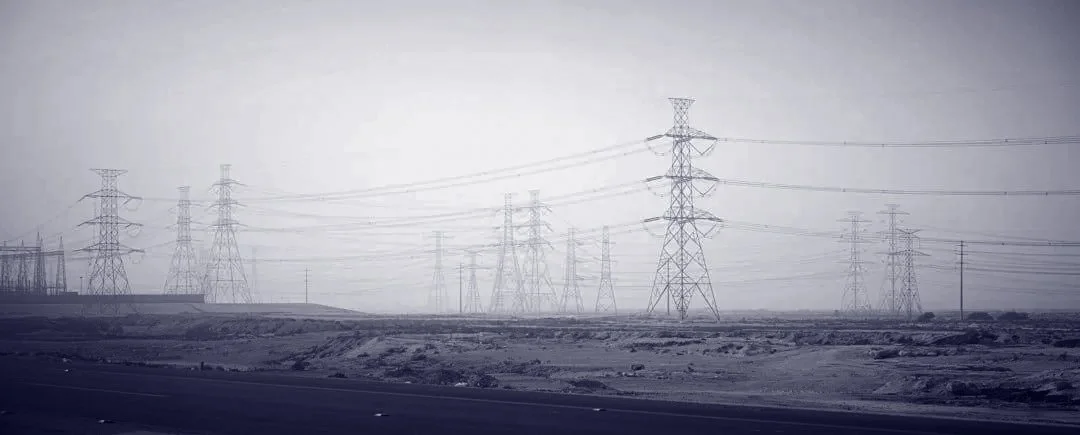
Critical infrastructure—especially the power grid—has become an increasing target of concern. Even relatively small disruptions can cascade into widespread outages affecting thousands of homes and businesses. I’ve written before about the importance of preparedness during infrastructure disruptions, including how a prolonged power outage can quickly create serious problems for unprepared families.
You don’t need to become a survivalist to prepare for this. But it’s wise to take a simple step that many families overlook. Spend a quiet afternoon making sure you have the basics in place:
Dedicated Food and water for several days (preferably a week or two)
Flashlights and backup batteries
A way to receive emergency information if the power goes out
Basic medical supplies (especially a backup of critical perspecriptions)
Preparedness doesn’t require paranoia. It requires a little foresight.
Your Job Is to Get Off the X
One of the concepts we teach frequently in personal protection is simple:
Get off the X.
In other words, remove yourself from danger as quickly as possible.
Your objective is not to investigate what’s happening. It’s not to film it on your phone. And it’s certainly not to play the hero.
Your job is to move yourself—and the people with you—away from the threat. Distance is one of the most powerful forms of protection.
Preparedness Doesn’t Mean Living in Fear
At its core, personal security comes down to two realities: danger exists, and ultimately you are responsible for your own safety. Those ideas form the basis of what I call Two Simple & Universal Truths.
But let me end with an important point. None of this advice means you should stop living your life.
Go to the concert. Attend the game. Travel. Enjoy time with friends and family.
In fact, my daughter recently went to a concert she had been looking forward to for months. Before she left, we did a quick safety briefing—nothing dramatic.
We just reviewed the basics discussed above
After that? Enjoy the show.
Preparedness isn’t about avoiding life.
It’s about having the ability to move confidently through the world, knowing that if something unexpected happens, you’re not helpless. You’re ready.
Ready to Take the Next Step?
Whether you’re looking for personal security training, a vulnerability assessment for your home or workplace, or guidance on building preparedness into your lifestyle, we can help.
Everyone’s situation is different. Get started on your own plan:
Read LiveReady: A Guide to Protecting Yourself in an Uncertain World
For guidance on conducting your own vulnerability assessmentContact us
We can work with you and your family to create a customized preparedness plan for you and your family